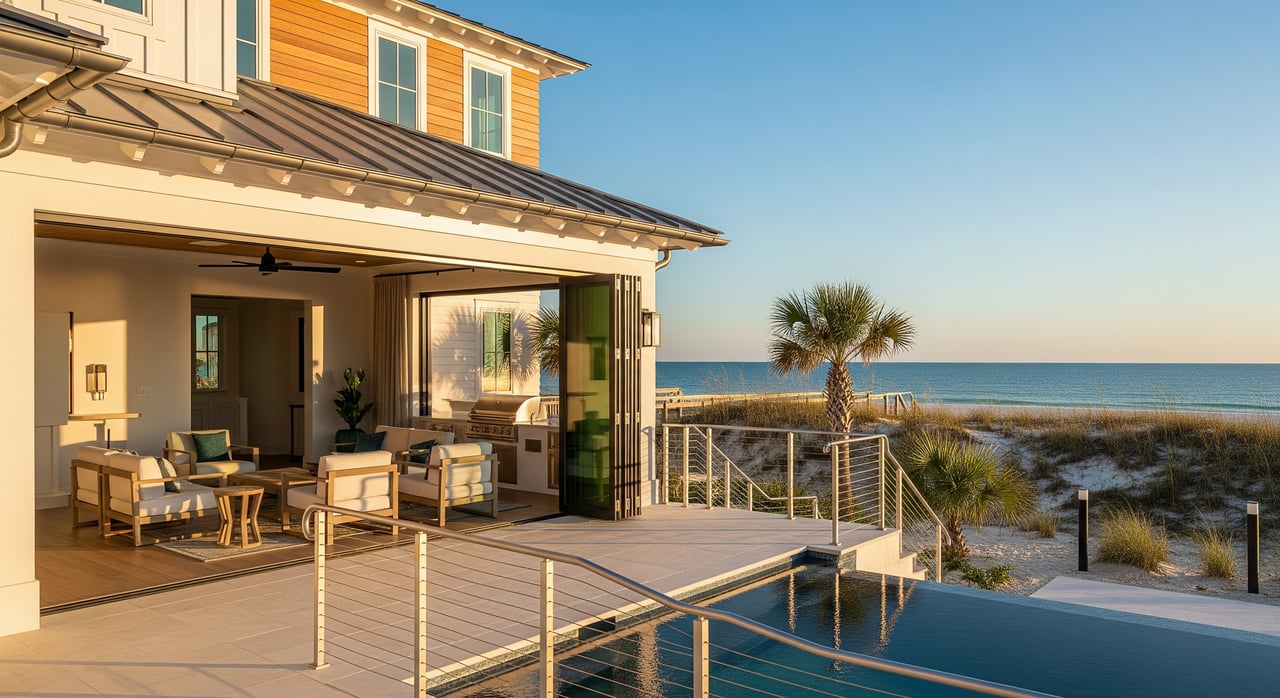
Salt air, storms, and sun make Bay County beach homes special and challenging. If you own or invest here, you want upgrades that look stunning in photos, stand up to the Gulf environment, and help your property sell faster and for more. This guide shows you where to put your dollars for the best impact, from impact-rated openings to outdoor living and low-maintenance finishes. You will walk away with a clear plan you can start using today. Let’s dive in.
Why Bay County upgrades pay off
Bay County sits on the Gulf of Mexico and faces hurricane risk, salt-laden air, high humidity, and periodic storm surge. These conditions wear out standard materials faster than inland homes. Buyers here value durability, storm readiness, and low upkeep.
Florida’s building code sets strict wind and impact standards on the coast. Major exterior projects often require permits and approved products. Many wind mitigation features can also qualify for insurance discounts. When you choose coastal-smart upgrades, you improve your day-to-day living, support insurability, and create powerful selling points.
Top renovations with strong ROI
Impact-resistant windows and doors
For coastal buyers, impact-resistant openings feel like a must-have. They protect against windborne debris, reduce drafts, and can dampen noise while filtering UV. They also deliver confidence during storm season and show well in marketing.
What to look for:
- Products with Florida product approvals and tested structural performance.
- Laminated impact glass and frames designed for coastal wind loads.
- Proper flashing and integration to prevent water intrusion.
Important: Replacements typically need permits and product approval documents. If you also add larger sliders that frame Gulf views, make sure the system meets impact criteria or is paired with rated shutters.
Durable exterior cladding and trim
Salt, wind, and moisture punish wood. Fiber cement siding, PVC or engineered trim, and stainless or hot-dip galvanized fasteners resist rot and warping. You get crisp, long-lasting curb appeal without constant repainting.
Keep colors neutral and coastal to help photos pop. Factory-finished products often extend repaint cycles, which appeals to both buyers and inspectors.
Roofing and roof-edge improvements
A newer, code-compliant roof earns trust with buyers and insurers. Consider impact-rated shingles or a tested metal system with proper underlayment and flashing. Pay attention to roof-to-wall connections and documentation. When you list, showcasing roof age, materials, and approvals helps reduce buyer friction.
Outdoor living that showcases the coast
Outdoor spaces in Bay County can make or break a listing. Covered rooms, elevated decks with composite decking, outdoor showers, and simple, weather-ready kitchens photograph beautifully and extend usable space.
Build with corrosion-resistant fixtures, powder-coated or marine-rated appliances, and easy-drain layouts. Landscape with salt-tolerant plants to keep maintenance low and give a lush but durable look.
Interior flooring built for moisture and sand
Continuous, durable flooring makes your home feel bigger in photos and stands up to wet feet and beach gear.
Consider:
- Luxury vinyl plank for a warm, wood-look that is waterproof and easy to clean.
- Porcelain tile in plank or large-format styles for high-traffic areas and baths.
- Sealed concrete for a modern, low-maintenance vibe in rental-oriented spaces.
Avoid traditional site-finished hardwood at ground level. If you love wood, choose engineered products designed for moisture resistance and follow strict maintenance routines.
Kitchens and baths: design-forward, cost-smart
Minor kitchen upgrades go a long way. Reface or paint cabinets, add new hardware, and install quartz or other resilient counters. In baths, swap tired fixtures for low-maintenance finishes, refresh lighting, and use durable tile and moisture-resistant cabinetry.
Use marine-friendly hardware and corrosion-resistant metals. The goal is a clean, modern look that holds up to salt air without a full gut renovation.
Materials and hardware that last at the beach
Corrosion-resistant metals and fasteners
For exposed hardware like handles, hinges, and bolts, Type 316 stainless is recommended in marine environments. Type 304 can show rust sooner near salt spray. Use stainless or hot-dip galvanized fasteners for siding, decks, and railings, and avoid mixing dissimilar metals. Proper drainage and detailing help prevent corrosion hot spots.
Finishes and paints that endure
Choose 100% acrylic exterior paints with UV-stable pigments and mildew resistance. Factory-finished composites can reduce repaint cycles. Regularly rinsing exterior surfaces with fresh water helps remove salt and extend coating life.
Decking and rail systems that resist the elements
Capped composite decking resists moisture, fading, and staining. Pair it with stainless or powder-coated aluminum rails designed for coastal exposure. These systems keep their color longer and photograph cleanly year after year.
Permits, insurance, and documentation
- Permits: In Bay County, most exterior upgrades, including windows, doors, roofing, decks, and new outdoor structures, require permits. Properties in flood or wind-borne debris zones may have specific requirements. Plan ahead and keep your approvals on file.
- Product approvals: Use Florida-approved impact products and follow manufacturer installation instructions. Keep product numbers and test data with your records.
- Insurance credits: Wind mitigation features like impact openings and roof-to-wall connections can qualify for insurance discounts. Amounts vary by carrier and the measures installed. Confirm potential savings with your insurer before you buy.
- Third-party certifications: Consider IBHS FORTIFIED evaluations when you complete major mitigation projects. Documentation can support marketing and insurance conversations.
Maintenance that protects ROI
Coastal homes benefit from simple, regular care:
- Rinse exterior surfaces with fresh water seasonally and after major storms to remove salt.
- Inspect metal fasteners, outdoor fixtures, and rail connections on a regular schedule.
- Touch up coatings, recaulk joints, and keep gutters and weep paths clear to prevent trapped moisture.
With the right materials and routine checks, impact windows and doors can last for decades, composite decking commonly reaches 20 plus years, fiber cement siding often exceeds 25 years, and metal roofing can outlast shingles in harsh exposure.
How to prioritize your budget
- Safety and code-first items
- Impact-resistant windows and doors.
- Roofing and roof-to-wall enhancements.
- Proper flashing and water management.
- Durable exteriors and interiors
- Fiber cement siding and engineered trim.
- Composite decks and corrosion-resistant rails.
- LVP or porcelain tile for main living areas.
- Outdoor living that sells
- Covered seating areas sized for dining and lounging.
- Outdoor shower with non-slip surfaces and good drainage.
- Simple, weather-ready cooking zone with sealed storage.
- Kitchens and baths that feel new
- Cabinet refacing or professional paint.
- Quartz counters and fresh plumbing fixtures.
- Updated lighting and mirrors for bright, clean lines.
This order helps you reduce buyer objections, support insurance, and create visual impact for photos and showings.
Position your property for resale
Staging and photography in Bay County should highlight light, views, and effortless indoor-outdoor flow. Neutral coastal palettes, consistent flooring, and uncluttered outdoor rooms create clickable images that translate into more showings. Keep maintenance records, permits, product approvals, and warranties organized. Providing a clean file to buyers and insurers builds trust and speeds decisions.
Next steps
If you plan to hold the property long term, prioritize corrosion resistance and water management so you spend less time on repairs. If you plan to sell or convert to a short-term rental, focus on photogenic outdoor areas, consistent flooring, and refreshed kitchens and baths. The right mix can increase buyer confidence, support insurance discussions, and boost your final sale price.
When you are ready to map upgrades to your budget and timeline, reach out for renovation-minded guidance. With deep local experience and design-forward marketing, Destin Sells Destin can help you choose the right projects, connect with licensed coastal contractors, and position your Bay County home to shine.
FAQs
Do impact windows increase resale value in Bay County?
- In coastal markets, impact openings are highly marketable for safety and storm readiness, and they often increase buyer confidence and perceived value.
Will my insurance go down after adding wind mitigation in Bay County?
- Many carriers offer discounts for specific wind mitigation features, but amounts vary by company and require documentation, so verify with your insurer first.
What flooring works best for Bay County beach rentals?
- Luxury vinyl plank and porcelain tile are top picks for moisture resistance, easy cleaning, and a warm look that photographs well.
Do I need a permit to replace doors and windows in Bay County?
- Yes, window and door replacements typically require permits and Florida product approvals, especially in coastal wind-borne debris zones.
How often should I rinse and maintain exterior surfaces near the Gulf?
- Plan seasonal fresh-water rinses and post-storm cleanups, plus regular inspections of metal hardware, sealants, and coatings to limit salt damage.
