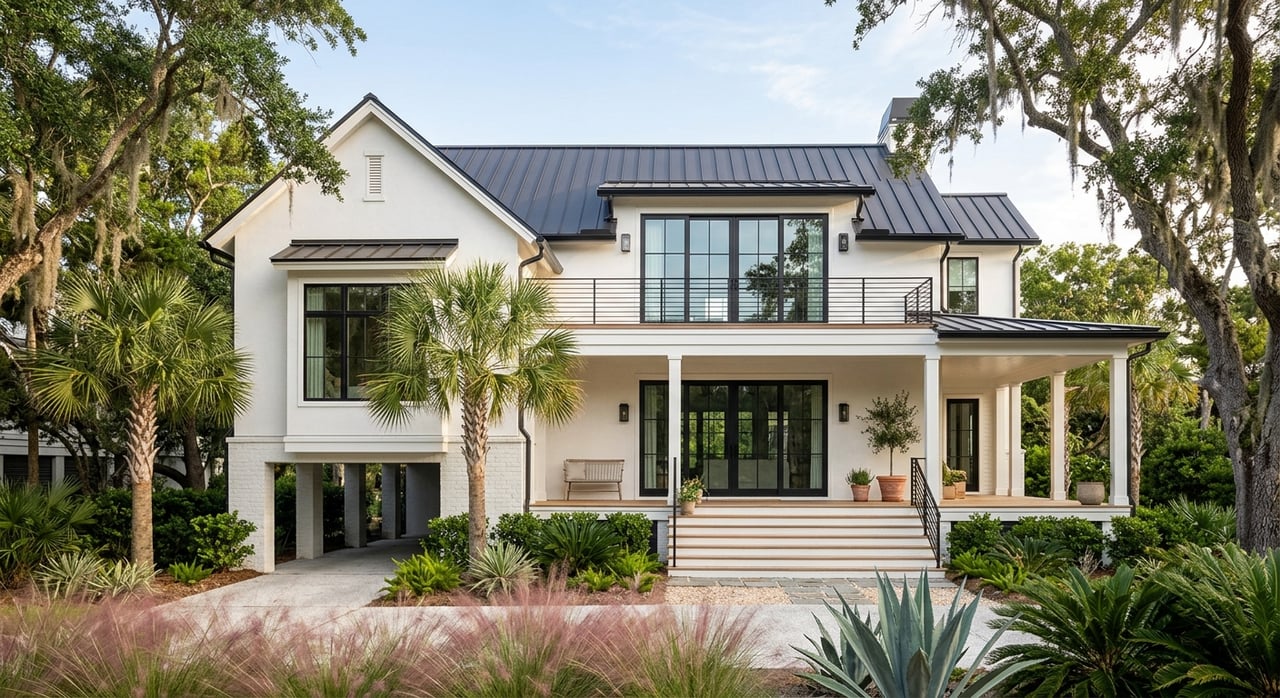
Dreaming about a place on the Emerald Coast but wondering how to make the numbers work without giving up your Buckhead home? If you have built substantial equity over time, you may have more flexibility than you think. The key is understanding how equity access, second-home financing, taxes, and coastal carrying costs all fit together before you start shopping. Let’s dive in.
Why Buckhead Equity Gets Attention
For many Buckhead homeowners, equity is not just a paper gain. It can become a practical tool for funding a second-home purchase, especially when you want to keep your primary mortgage in place.
That conversation is especially relevant in a market with solid home values. Realtor.com reported a median home price of $450,000 in Buckhead in February 2026, with North Buckhead at $597,000 and West Paces Ferry at $1.1125 million. If your mortgage balance is well below your home’s value, you may have usable equity to support a down payment or purchase costs on a coastal retreat.
At the same time, the Emerald Coast is a meaningful purchase, not an impulse buy. Zillow data for February 2026 showed an average home value of $865,262 in Santa Rosa Beach and $610,329 in Destin, with median list prices of $1,168,767 and $649,800 respectively. That makes it important to plan for both the upfront cash you need and the long-term costs of ownership.
Why Not Refinance Everything
Many homeowners first ask whether they should refinance their Buckhead home instead of using a home equity product. That choice matters even more in today’s rate environment.
Freddie Mac reported the average 30-year fixed mortgage rate at 6.38% on March 26, 2026. If your existing first mortgage has a lower rate, replacing it with a new loan just to pull cash out may not be the most appealing option.
That is one reason many buyers compare a HELOC or home equity loan against a cash-out refinance. Keeping your current first mortgage intact while borrowing against equity separately may preserve a better rate on your primary home, but the right fit depends on your payment comfort, reserves, and long-term plans.
Three Common Ways to Use Home Equity
HELOC for flexible access
A home equity line of credit, or HELOC, gives you an open line of credit that you can draw from during a set draw period. According to the Consumer Financial Protection Bureau, HELOCs usually have variable rates, which means your payment can change over time.
That flexibility can help if you want to stage your spending for a down payment, improvements, or furnishing costs. But a HELOC can also be less predictable, and lenders may freeze future draws if home values decline or your financial picture changes.
Home equity loan for a fixed amount
A home equity loan is typically a lump-sum loan with a fixed interest rate. The CFPB glossary notes that this structure can make payments more predictable than a HELOC.
If you know exactly how much you want to use from your Buckhead equity, this can be attractive. For example, if you want a defined amount for a down payment and closing costs on a Destin or 30A purchase, a fixed-rate loan may feel easier to budget around.
Cash-out refinance for a full reset
A cash-out refinance lets you replace your current mortgage with a larger one and take the difference in cash. The CFPB has noted that borrowers often use the proceeds for major expenses, but it also points out that rolling more obligations into mortgage debt can raise risk if the new payment becomes hard to manage.
This option may make sense in some cases, but it deserves careful review. If your current mortgage terms are favorable, giving them up could be more expensive than using a separate equity product.
How Lenders View a Coastal Retreat
Before you rely on Buckhead equity, make sure you understand how the Emerald Coast property will be classified. The label matters because lending rules for a second home differ from rules for an investment property.
Fannie Mae says a second home must be a one-unit property, suitable for year-round use, occupied by you for part of the year, under your exclusive control, and not operated as a rental property or timeshare. If the lender treats the property as a true second home, that can support more favorable terms than an investment-property loan.
If you plan to rent the property, classification becomes more complex. Fannie Mae also says rental income cannot be used for qualifying purposes if the loan is still being delivered as a second-home loan, so your lender needs a clear picture of how you intend to use the home.
Reserve Requirements Matter
Many buyers focus on the down payment and overlook the cash they must still keep available after closing. That can be a mistake, especially when you are carrying two homes.
Fannie Mae’s reserve guidance says second-home transactions generally require two months of reserves, with additional reserves possible if you have multiple financed properties. Freddie Mac’s conforming standards also show that second-home purchase and no-cash-out refinance loans can go up to 90% loan-to-value, while second-home cash-out refinances are capped at 75% LTV under the charted guidelines.
In plain terms, using Buckhead equity can help you buy, but lenders may still want to see solid liquid reserves. You should plan for both the transaction and the financial cushion afterward.
Budget Beyond the Purchase Price
The monthly cost of an Emerald Coast retreat can be just as important as the acquisition strategy. A coastal home budget should be built with real numbers, not just a dream scenario.
The CFPB says closing costs usually run about 2% to 5% of the purchase price, before your down payment. It also notes that your monthly ownership costs should include property taxes, homeowner’s insurance, flood insurance, HOA fees, maintenance, and utilities.
On the coast, insurance deserves extra attention. The CFPB includes homeowners and flood coverage among the core ownership costs, and FEMA says flood insurance is available even outside the highest-risk areas. That means buyers considering Destin, Miramar Beach, Santa Rosa Beach, or 30A should treat insurance and recurring expenses as a first-step conversation, not a last-minute detail.
Tax Rules to Understand Early
A common assumption is that borrowing against your Buckhead home automatically creates a tax benefit. That is not something you should assume.
IRS Publication 936 says interest on home equity loans and HELOCs is deductible only if the borrowed funds are used to buy, build, or substantially improve the home that secures the loan. If you borrow against your Buckhead residence to buy a Florida retreat, that interest should not be treated as automatically deductible without CPA guidance.
The same IRS publication also explains that if a second home is rented part of the year, it generally must be used as a home for more than 14 days or more than 10% of the rental days, whichever is longer, to remain a qualified second home. If your plans include personal use and rental use, that distinction is worth reviewing before you close.
Florida Property Tax and Insurance Reality
If your Emerald Coast home will be a vacation property, do not assume it will qualify for every tax benefit associated with a primary residence. The Florida Department of Revenue says homestead exemption applies when the owner makes the property a permanent residence.
For most Buckhead buyers purchasing a retreat, that means the Florida home generally should not be expected to receive homestead treatment. That can affect your long-term carrying cost calculations and should be part of your early budgeting process.
Insurance is another major line item. Coastal buyers should plan carefully for homeowners, wind, and flood coverage, along with any HOA obligations and ongoing upkeep.
Questions to Ask Before You Buy
A smart purchase plan starts with a coordinated team. The CFPB recommends building a network of advisors before making major mortgage decisions.
Here are a few questions worth asking early:
- How will a new equity payment affect your debt-to-income ratio?
- Will the Emerald Coast home be underwritten as a second home or an investment property?
- How much cash will you need for the down payment, closing costs, reserves, and post-closing liquidity?
- Do insurance, taxes, HOA fees, and maintenance still leave room for the lifestyle you want?
- Does the borrowing structure align with your tax strategy and long-term financial plan?
Those questions can help you avoid stretching for a purchase that looks fine on paper but feels tight in real life.
Where Local Guidance Adds Value
Once your financing strategy starts to take shape, the next step is finding the right coastal fit. That is where local knowledge matters.
On the Emerald Coast, your options can vary widely by price point, insurance profile, HOA structure, rental considerations, renovation potential, and how you plan to use the home. A boutique advisor with deep local experience can help you compare Destin, Miramar Beach, Santa Rosa Beach, and 30A options through both a lifestyle lens and a practical ownership lens.
If you are moving from Buckhead into a second-home purchase, you may also want insight on turnkey homes, renovation opportunities, design potential, and community restrictions that affect long-term use. The goal is not just to buy a beautiful property. It is to buy one that fits the way you actually want to live.
If you are exploring how to turn Buckhead home equity into an Emerald Coast retreat, Destin Sells Destin can help you evaluate the local market, compare property options, and navigate the buying process with a high-touch, concierge approach.
FAQs
What is the best way to use Buckhead home equity to buy an Emerald Coast retreat?
- The best option depends on your goals, but common choices include a HELOC, a home equity loan, or a cash-out refinance on your Buckhead home.
How do lenders define a second home on the Emerald Coast?
- Fannie Mae says a second home must be a one-unit property that you occupy for part of the year, that is suitable for year-round use, under your exclusive control, and not treated as rental property or a timeshare.
Can you deduct HELOC interest from a Buckhead home used to buy a Florida second home?
- IRS Publication 936 says home equity interest is deductible only when the funds are used to buy, build, or substantially improve the home securing the loan, so you should not assume deductibility without tax advice.
How much cash do you need besides the down payment for an Emerald Coast home?
- CFPB says closing costs typically run 2% to 5% of the purchase price, and you should also budget for reserves, insurance, taxes, HOA fees, maintenance, and utilities.
Does a Florida vacation home qualify for homestead exemption?
- The Florida Department of Revenue says homestead exemption applies when the property is your permanent residence, so a true second home generally should not be assumed to qualify.
Why does insurance matter so much for Emerald Coast second homes?
- Coastal ownership costs can include homeowners, wind, and flood coverage, and those expenses can significantly affect the true monthly cost of owning a retreat property.
